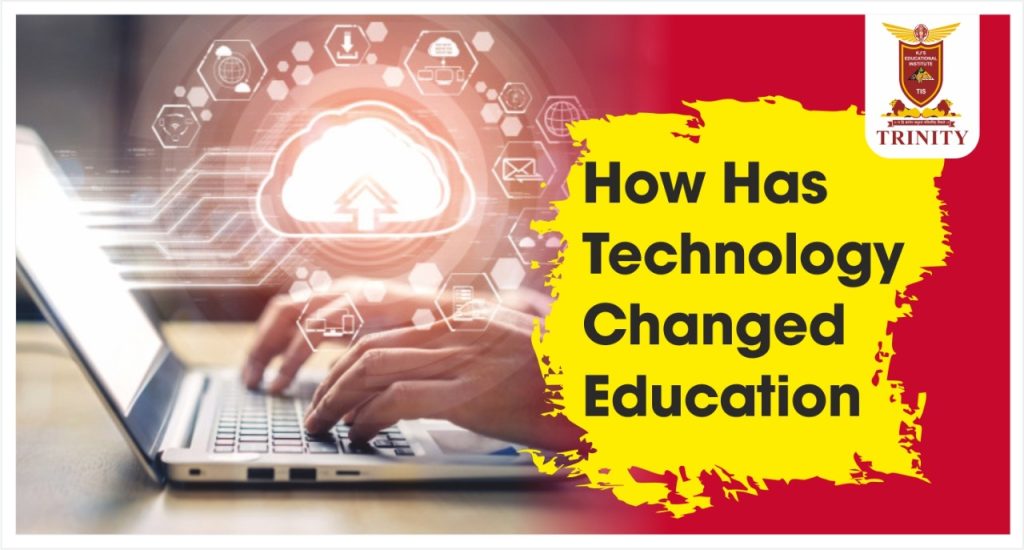
How has Technology Changed Education
We live in a world where technology shapes our daily lives, influencing everything from communication to education. While some argue that technology makes life easier by providing instant access to information, others claim it fosters laziness and disconnects people from reality. Regardless of the debate, one thing is clear: technology has been on an upward trajectory since the rise of the internet in the 1980s and 1990s. It became widely accessible in the early 2000s and eventually revolutionized our interactions with the advent of smartphones.
Today, let’s explore how technology has transformed education, impacting schools across the globe and reshaping traditional learning methods.
How Has Technology Transformed Education?
At Trinity International School, one of the best CBSE schools in Pune, we have extensively studied the effects of technology on education. Here are some of the key ways in which it has reshaped learning experiences:
1. Enhanced Accessibility
Traditionally, education required students and teachers to be physically present in the same space. Today, the internet enables seamless communication, making remote learning a reality. Online education has opened new doors, allowing students to pursue degrees from the comfort of their homes. Many traditional institutions now offer virtual classrooms, and fully online schools have emerged, where students and teachers may never meet in person. Additionally, cyber-schooling has become a viable option for primary and secondary education, providing students with the flexibility to learn from home.
2. Increased Flexibility
The internet has not only increased accessibility but also enhanced flexibility in learning. Students no longer have to adhere to rigid schedules; instead, they can access course materials online and complete assignments at their own pace. This is particularly beneficial for those juggling work, family responsibilities, or other commitments. As long as students meet deadlines, they have the autonomy to plan their study hours, fostering self-discipline and time management skills.
3. Evolving Teacher-Student Interactions
Technology has redefined the way teachers and students interact. Some view this change as positive, while others argue it diminishes personal engagement. At T.I.S, recognized among the top schools in Pune, we prioritize student-teacher engagement programs to ensure meaningful interactions. With the help of emails, instant messaging, and video calls, students can seek guidance from their teachers anytime, eliminating the need to wait for the next class.
4. The Rise of Online Assessments
With the growth of online education, digital examinations have become a common practice. Online assessments offer objectivity, as computers grade multiple-choice questions without bias. This method benefits students who experience anxiety in traditional test settings. However, online assessments have limitations; while multiple-choice questions can be graded instantly, essay-based answers still require human evaluation.
5. Empowering Students with Special Needs
Technology has significantly improved the ability of schools to accommodate students with diverse needs. Those with hearing, speech, or vision impairments, as well as homebound students, now have better access to education. Additionally, students with learning, emotional, or developmental challenges can benefit from assistive technologies. At Trinity International School (CBSE Schools in Kondhwa, Pune), we believe that technology fosters inclusive learning environments, ensuring that education is accessible to all.
Final Thoughts
The integration of technology in education has brought remarkable advancements, enabling flexible, inclusive, and engaging learning experiences. While challenges exist, the benefits far outweigh the drawbacks, paving the way for a future where education transcends physical boundaries and becomes more adaptable to individual needs. As technology continues to evolve, so will education. The key lies in finding the right balance—leveraging digital tools while preserving the essence of traditional learning.
Thank you for reading!